
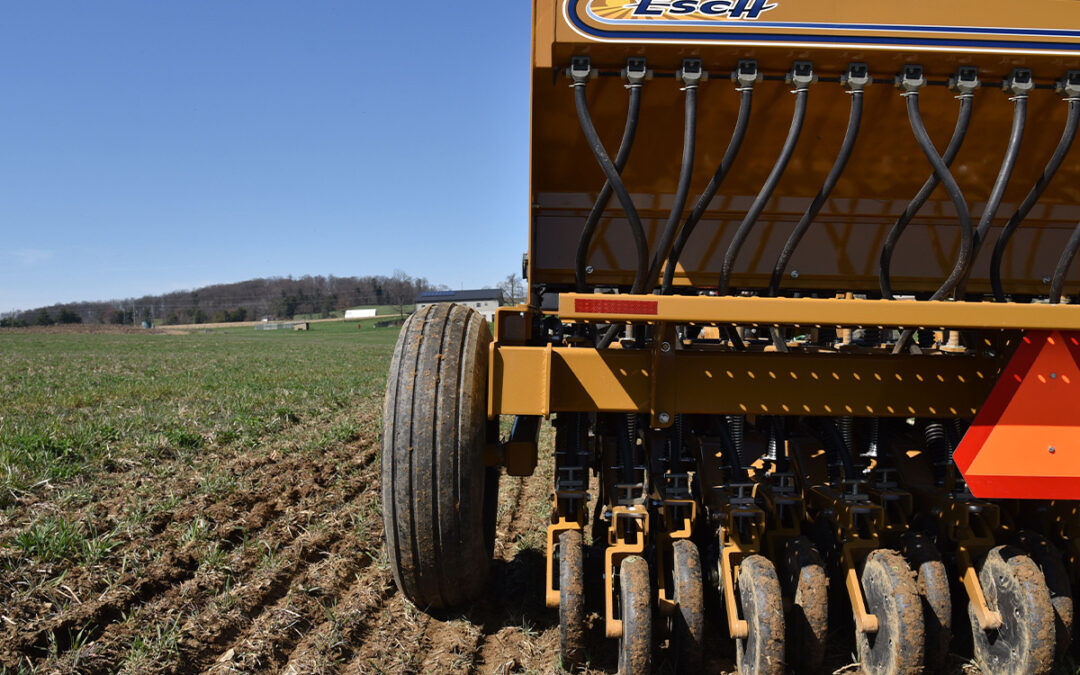
The best pasture seeding method depends on what you are trying to change. Adding clover to a thin stand, establishing a grass mixture, and replacing an unproductive pasture are different jobs. They should not automatically lead to the same equipment choice.
Begin with the existing stand, soil conditions, and seed species. Then choose a method that can place that seed appropriately and fit the available planting conditions. If your plan calls for drilling, review our Esch drills for pasture and forage seeding as the equipment-selection step.
Decide what the pasture needs before choosing equipment
Walk the field and record the useful plants, bare areas, weeds, and places where growth is poor. Review soil-test results and discuss whether fertility, drainage, existing vegetation, or management is limiting the stand.
Iowa State’s forage establishment checklist emphasizes soil testing, matching species to the site, seedbed preparation, and management after establishment. New seed alone does not resolve every reason a pasture has become thin.
Write a one-sentence goal for the work. For example, “introduce a suitable legume into an otherwise useful grass stand” gives you a different decision from “establish a new grass and legume mixture after preparing the field.” Neither example is a recommendation for a particular field.
When no till drilling is worth evaluating
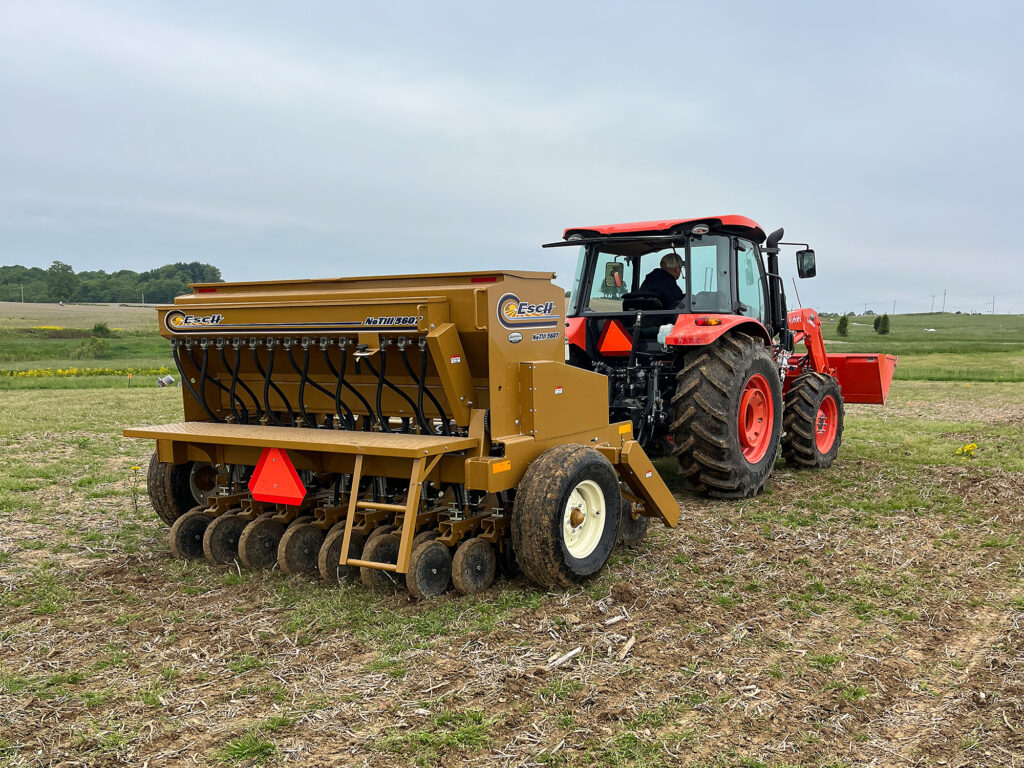
Drilling is worth considering when the planting plan requires controlled seed placement and you want to avoid preparing the entire field with tillage. The drill configuration must suit the seed, residue, and soil conditions.
Iowa State describes using a no-till drill in killed sod or untilled crop residue, with attention to placement depth and seed-to-soil contact. It also distinguishes equipment set up for small forage seeds from a general grain-drilling setup. Check the actual arrangement you will use rather than assuming any drill handles every seed mixture.
Before selecting equipment, ask the dealer how the chosen setup meters your seed and how to calibrate and check placement. The field plan still needs to address competition from existing vegetation. A drill is a planting tool; it is not a substitute for that preparation decision.
Drilling also creates an access and scheduling question. Confirm that the machine fits through gates and lanes, works with the available tractor, and can complete the planned acres during suitable conditions.
When broadcasting can fit the plan
Broadcasting distributes seed over the surface. It can be considered where the seedbed and follow-up operation are suited to bringing the seed into contact with soil.
Iowa State’s checklist includes broadcasting onto a firm, tilled seedbed followed by rolling or cultipacking. That is a specific establishment approach, not a promise that scattering seed into thick existing vegetation will produce the same result.
Ask your agronomy adviser to specify the preparation and follow-up needed for your seed and field. Include those operations in the comparison with drilling: equipment, labor, workable conditions, and time. The cost of the seeder alone does not describe the whole job.
When frost seeding may be suitable
Frost seeding is a form of broadcasting timed to use freeze-thaw action at the soil surface. It is especially associated with introducing suitable legumes into an existing stand, rather than serving as a universal replacement for drilling.
Iowa State’s frost-seeding guidance identifies red clover as an example and generally discourages the method for grasses. It explains that exposed soil, limited thatch, suitable soil conditions, and freeze-thaw timing affect success.
Use local conditions and Ohio agronomy guidance to determine whether the method fits your field. A date on the calendar does not establish that useful freeze-thaw conditions or adequate seed-to-soil contact exist. Species that work in one frost-seeding plan should not be assumed appropriate for another.
Compare the complete operation
For each method you are considering, answer the same questions:
- What change are you trying to make to the stand?
- Which species and seed mixture will you use?
- How will the seed reach soil and be placed appropriately?
- What preparation is needed before seeding?
- Which equipment, tractor, and operator will do each operation?
- How many acres can be completed in the available conditions?
- How will the new seedlings be managed after emergence?
Take those answers to your local extension educator or agronomy adviser for the field plan. Take the resulting equipment requirements to the dealer. Keeping those decisions connected helps you avoid buying a tool before knowing what the job requires.
Two different goals can lead to different choices
For an illustrative pasture with a useful grass stand but a need for more clover, frost seeding might be one option to discuss if the stand and seasonal conditions suit it. That does not establish its suitability for grass establishment elsewhere on the farm.
For a separate project that needs a new forage mixture and controlled seed placement, a properly configured drill might warrant closer evaluation. The selected seed, field preparation, calibration, and planting conditions still determine the setup.
The comparison should end with a method suited to the field, not a claim that one method always wins. Once drilling is part of your plan, Ackerman’s Equipment can discuss agricultural Esch no-till drill options and the tractor and seed information needed for selection. Call 330-674-0495 to discuss your equipment needs.